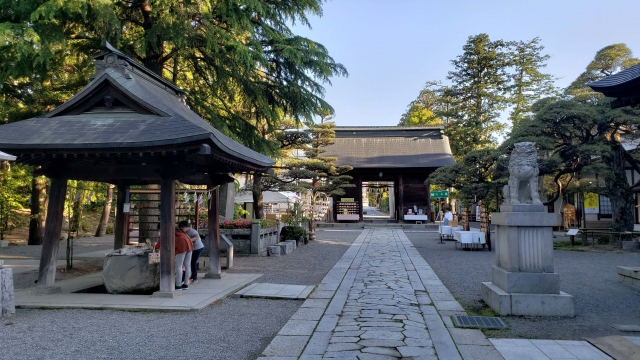
Shrines are naturally suited to solo visits — you're here to commune with the divine at your own pace. On weekday mornings, you may have the entire grounds to yourself. Wander the zodiac stones, pass through the purification gate, take a breath. Nobody will rush you.
The moment you step through the torii gate, the noise of the world drops away.
City sounds fade. The air shifts. Your posture straightens, almost involuntarily. There are no souvenir stalls, no restaurants, no tour groups with matching hats. Just a graceful, ancient compound that has been here since the Heian period — and the quiet that comes with that kind of age.
Five minutes from Katsunuma IC. Almost no tour buses. This is Asama Shrine of Kai Province — one of Japan’s hidden spiritual treasures.
Japan’s ranking system for shrines: what is an “Ichinomiya”?
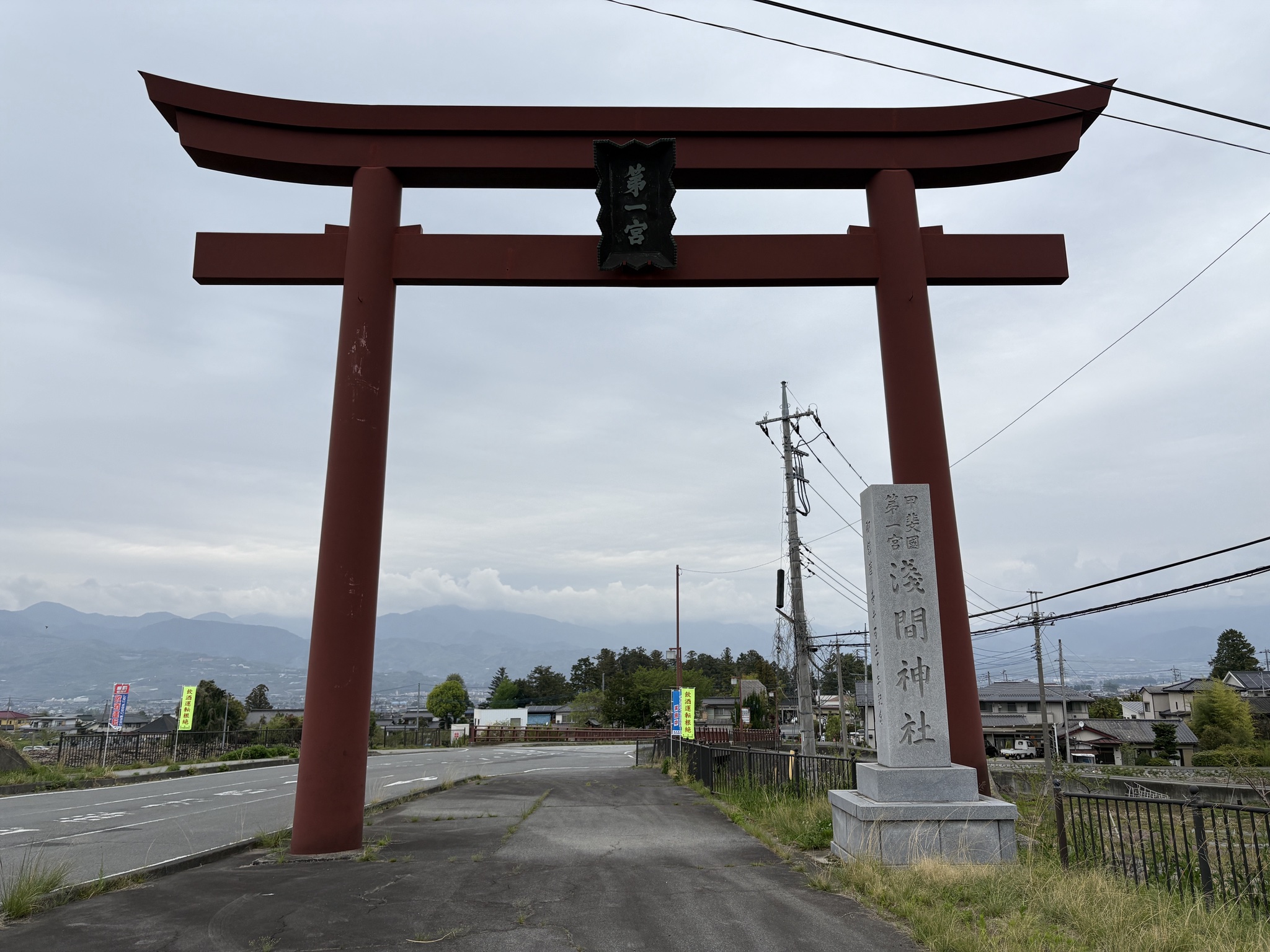
The great torii gate along National Route 20
In feudal Japan, each province designated its most prestigious shrine as the “Ichinomiya” — literally, the “first shrine.” Asama Shrine has held this title for Kai Province (modern-day Yamanashi) since 865 AD, when it was officially recognized in imperial records.
That’s over 1,150 years of unbroken history. The grounds aren’t large, but the spiritual weight is unmistakable.
The deity: Konohanasakuya-hime
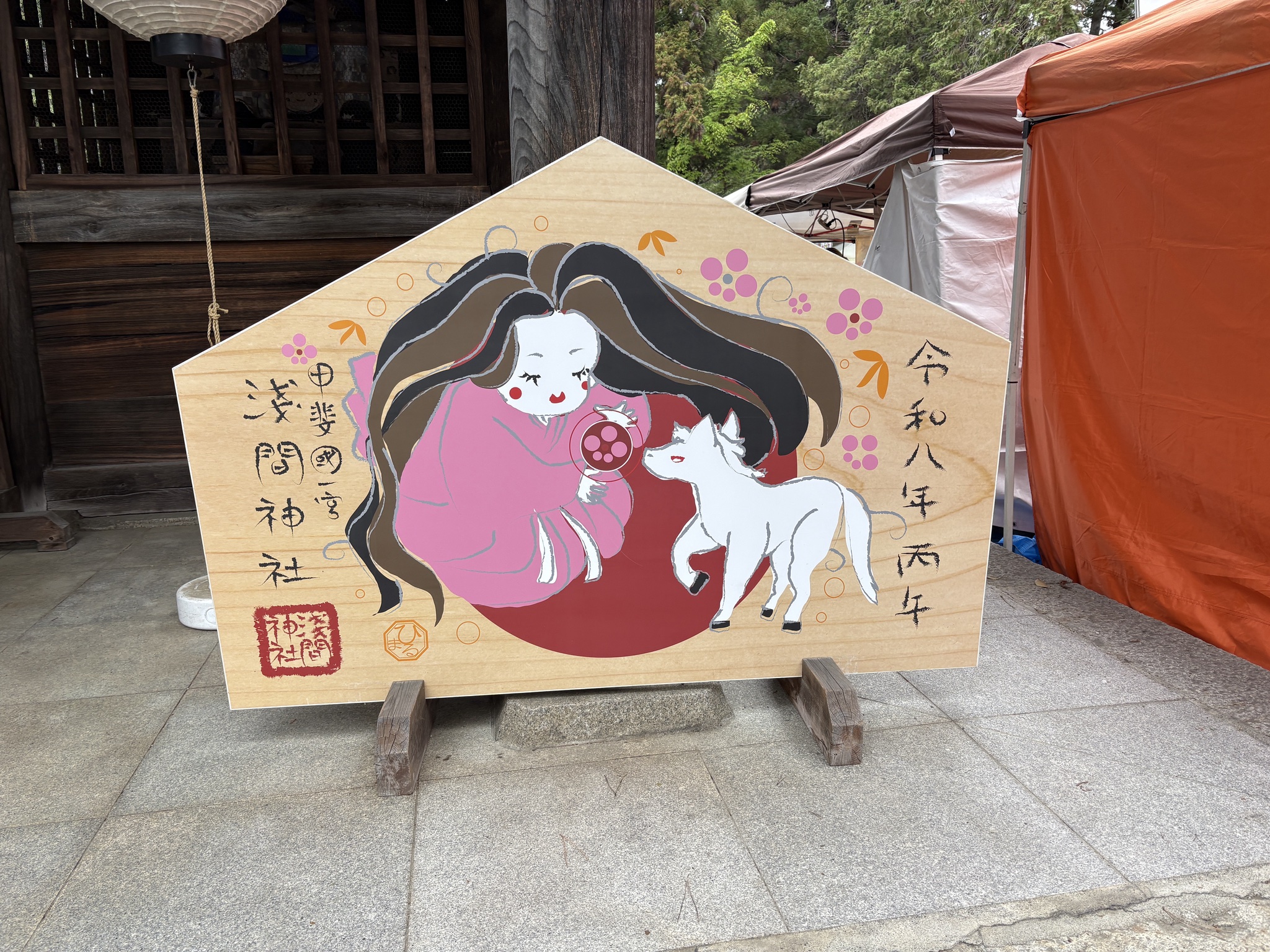
The main deity enshrined here is Konohanasakuya-hime — the goddess of blooming flowers, beauty, and safe childbirth. According to Japanese mythology, she proved her faithfulness by giving birth in a burning delivery room, untouched by the flames. A goddess of grace and fierce inner strength.
Visitors pray here for love and marriage, beauty, safe delivery, and fertility. The energy of the shrine feels distinctly feminine — serene and quietly powerful.
Why come here instead of the famous Mount Fuji shrines?
The Fuji Hongu Sengen Taisha in Shizuoka is the head shrine of the 1,300 Sengen shrines across Japan, and it draws enormous crowds. Asama Shrine in Yamanashi belongs to the same spiritual lineage — but almost no one outside the region knows it exists.
On a quiet weekday morning, you may be the only person here. That is an experience that cannot be found at the famous sites.
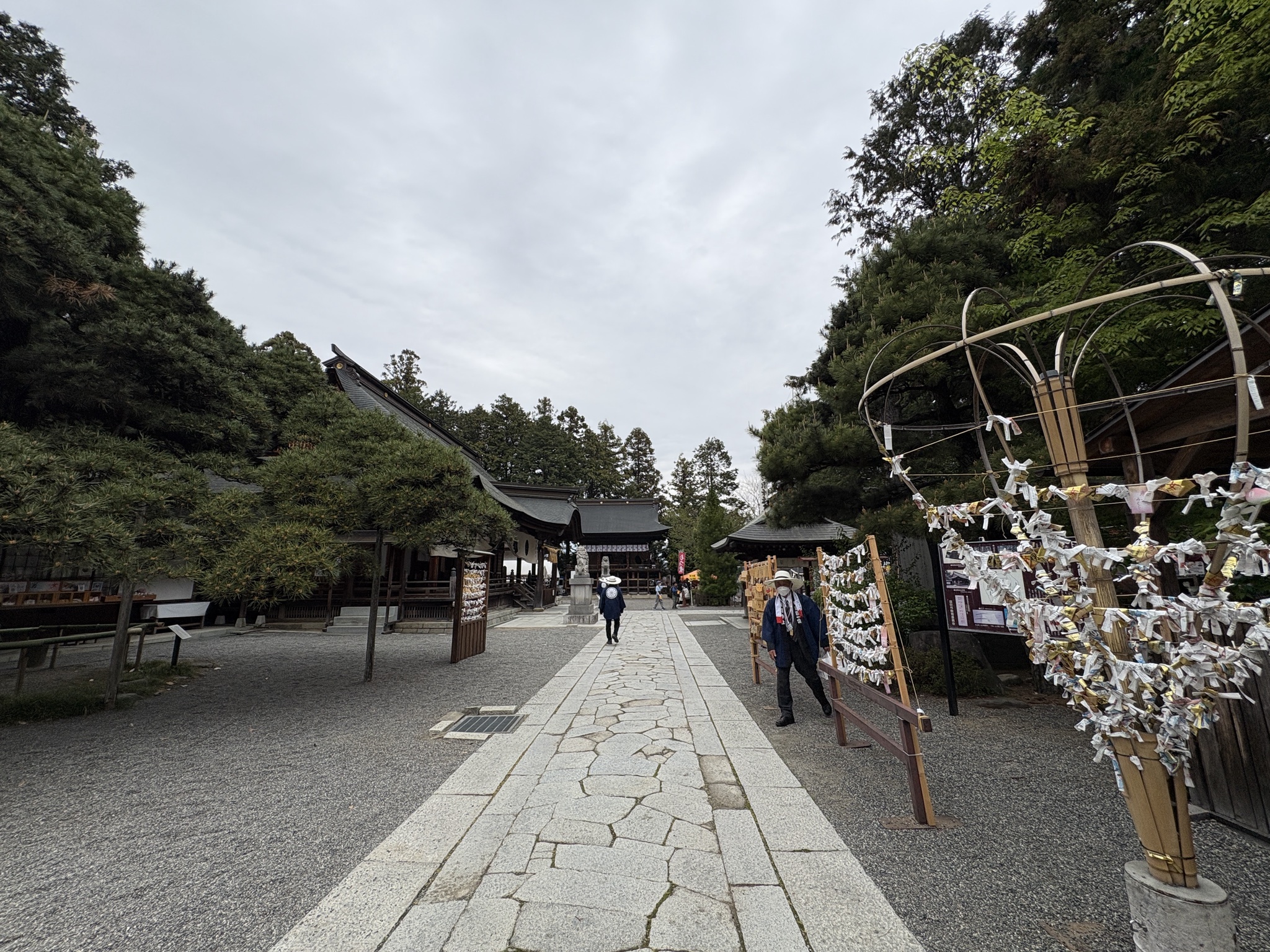
The Purification Gate and Zodiac Stones: a small adventure
After paying your respects at the main hall, walk to the right and deeper into the grounds.
You’ll find the Harai-mon — a stone gate carved in the shape of a human figure. Passing through it is said to purify you of misfortune. It’s an unusual, slightly mysterious structure you won’t see at most shrines.
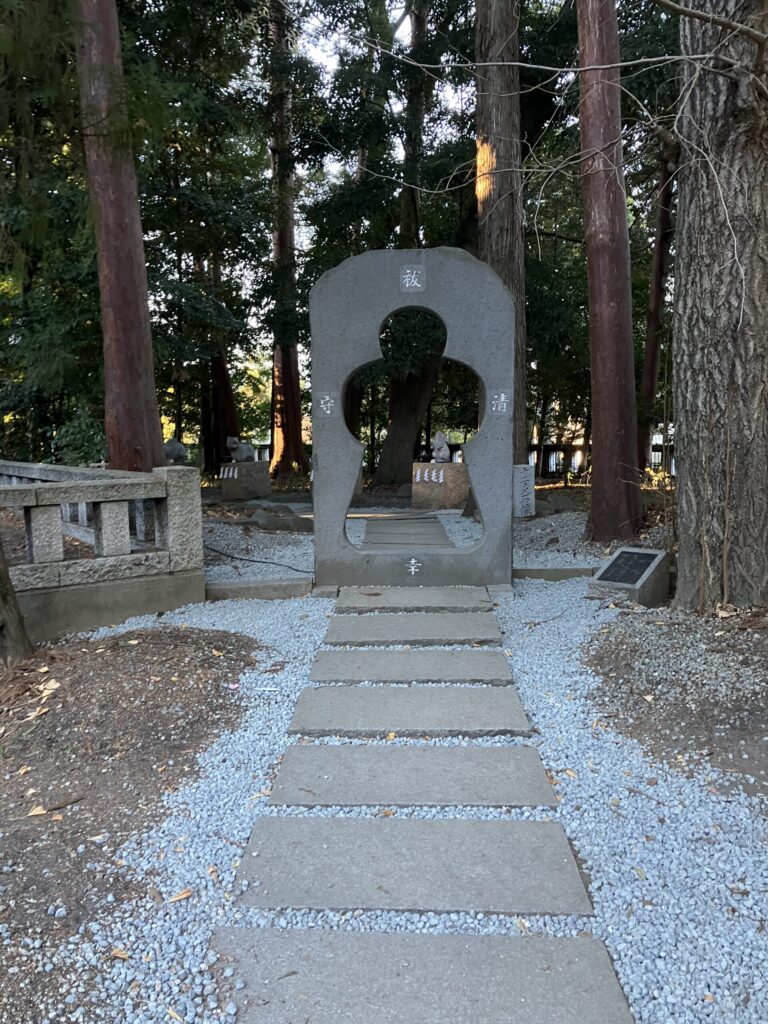
Beyond that, twelve small stone figures of the Japanese zodiac animals are arranged in a circle.
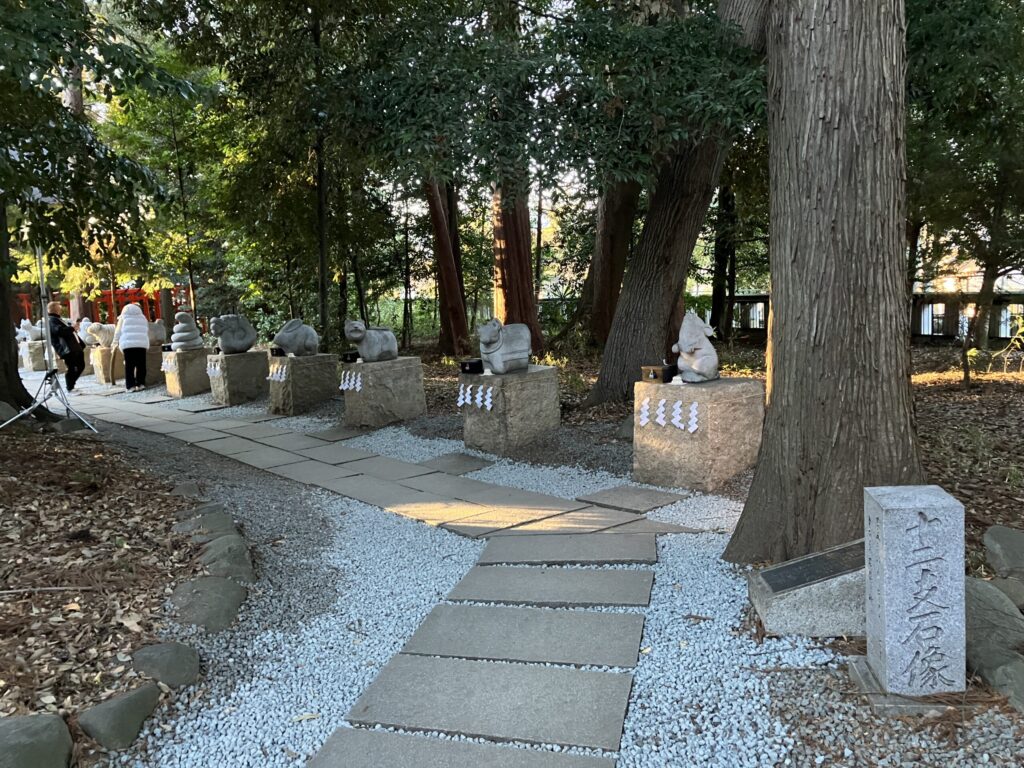
Find your birth year animal and pay your respects, or slowly walk the full circle. A small, meditative ritual — perfect for a quiet morning.
April 15: The Omiyuki Festival
Every April 15, the shrine hosts its annual Omiyuki Festival — one of Japan’s more unusual ceremonies. Men dressed in women’s long robes, faces painted white, carry the portable shrine through the streets while chanting “Sokodai, Sokodai.”
The tradition dates back centuries: the festival is held this way so the goddess Konohanasakuya-hime will not grow jealous during her processional. It is strange, joyful, and entirely unique to this place.
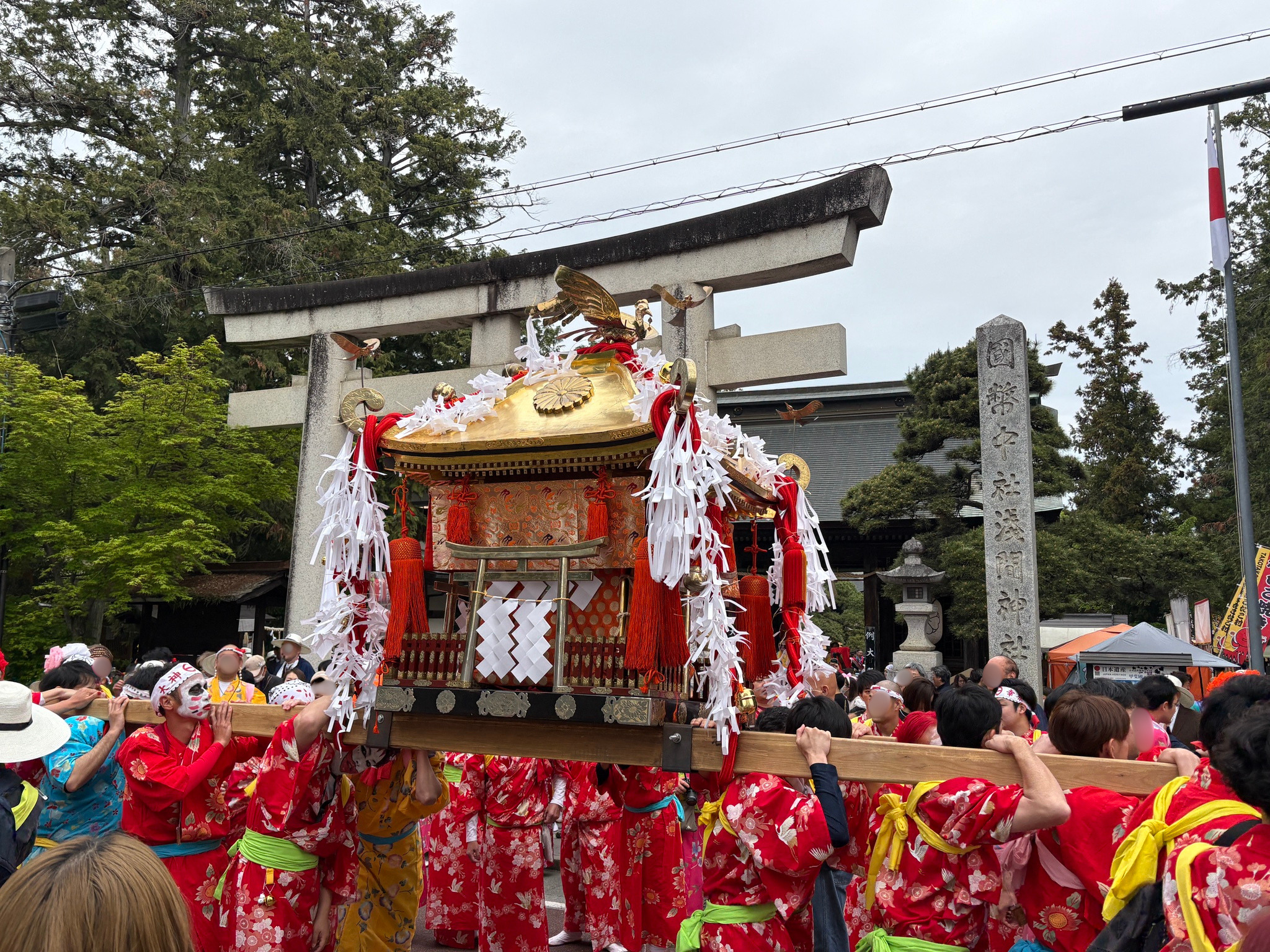
If you’re visiting Yamanashi in mid-April, this is worth timing your trip around. Outside of festival days, the shrine returns to its characteristic quietude.
Goshuin: the shrine stamp
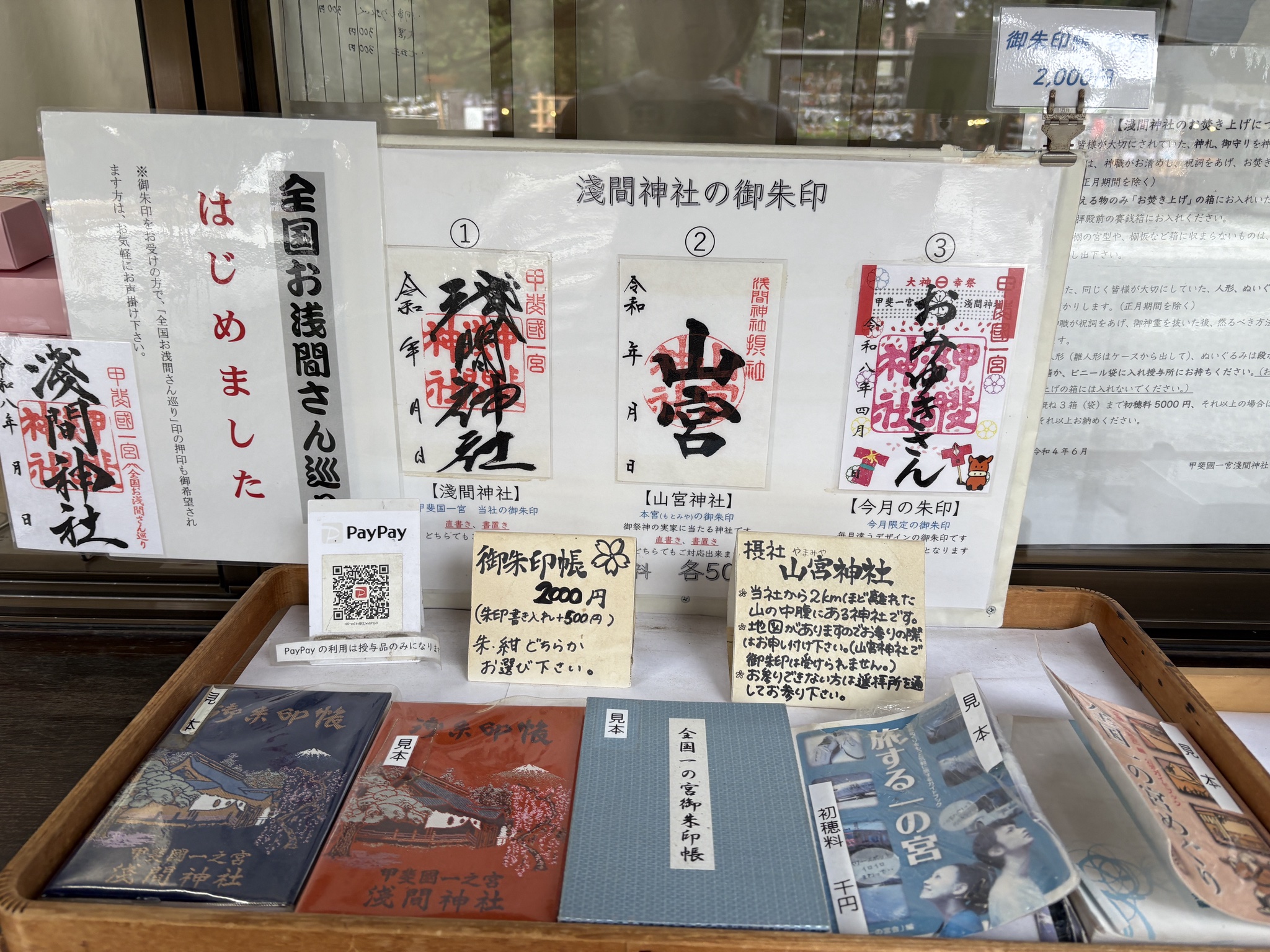
The shrine offers three versions of the goshuin (official shrine stamp): the standard Asama Shrine stamp, one for the affiliated Yamomiya Shrine, and a monthly limited design that changes each month. Each costs ¥500.
If you’re collecting stamps from Japan’s Ichinomiya shrines across the country, this is one to add to your list.
Getting There
By Car (recommended): 5 minutes from Katsunuma IC on the Chuo Expressway. Free parking on-site. By Train/Bus: Taxi from JR Yamanashi-shi Station (~10 min). Chuo Highway Bus — get off at Ichinomiya stop, walk ~10 min. Note: Access without a car is inconvenient.