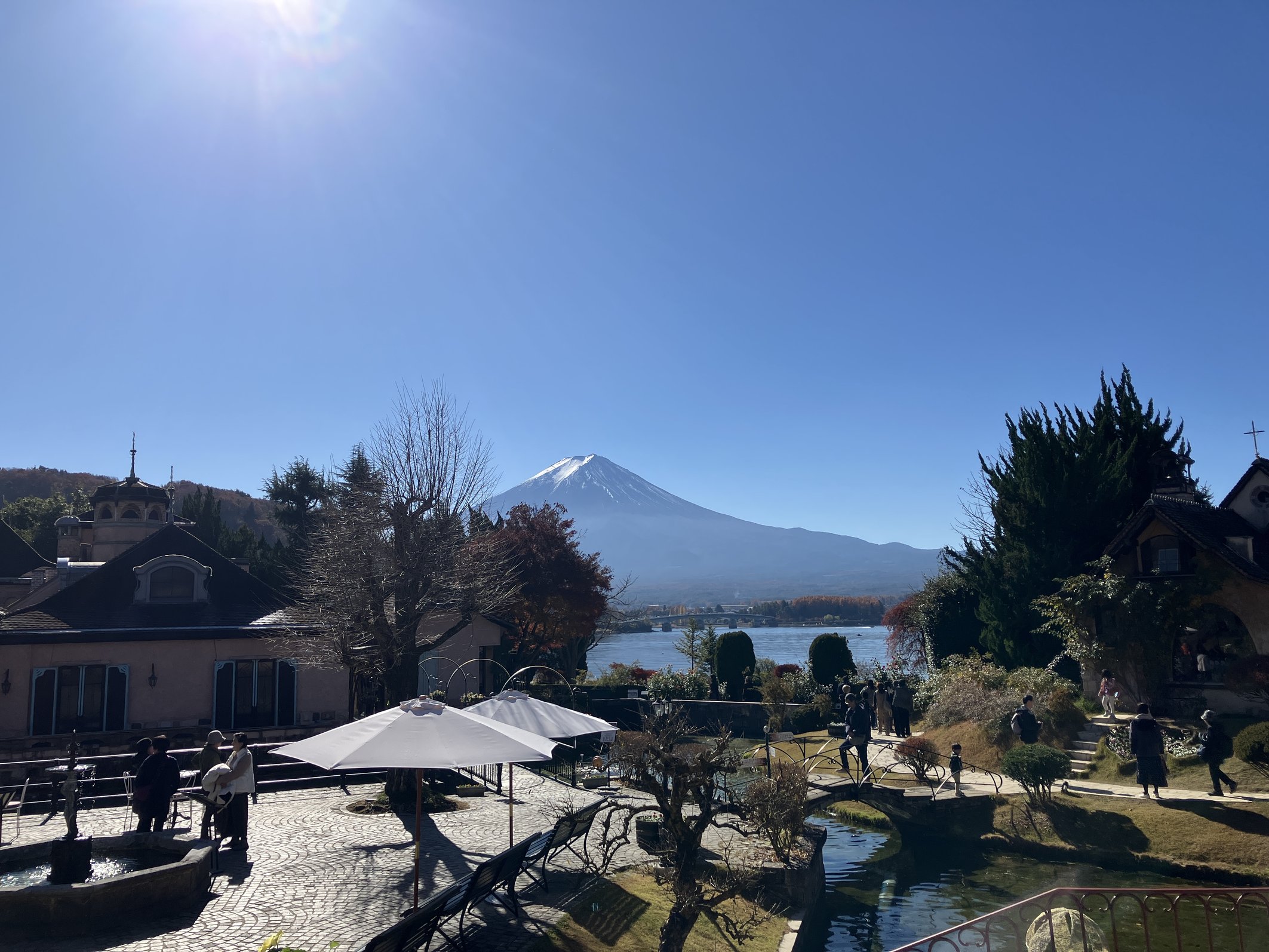
The grounds are spacious enough to find your own quiet corner even on busy days. The restaurant is comfortable for solo dining — refined atmosphere, no awkwardness. Check the mini-concert schedule when you arrive and build your afternoon around it. Half a day passes easily here without any sense of rushing.
The cobblestones, the flower beds, the stone fountain — and then, rising above the treeline at the end of the garden, Mount Fuji.
That particular combination is what makes Lake Kawaguchi’s Music Forest different from anywhere else in Japan. European garden design transplanted to the foot of Japan’s most famous mountain — and it works completely.
The dance organ
The first thing to know: find out when the dance organ performs.
Built in 1920, the organ is 13 meters wide and 5 meters tall — not an instrument you play, but one that plays itself from perforated rolls, filling the room with the sound of an entire orchestra. Every time it starts, people stop talking. It’s not what you expect.
The repertoire changes daily. Check the schedule at the entrance and plan your visit around a performance if you can.
Live music, every day
Beyond the organ, young classical musicians perform mini-concerts throughout the day, included with admission. The quality is real — these are conservatory-trained performers, not background music.
The restaurant offers live music during lunch as well: French cuisine with local ingredients, floor-to-ceiling windows looking out at the garden and mountain. Dinner hours are limited to weekends; on weekdays and weekend afternoons from 15:00, a sweets menu is available.
Note: the restaurant occasionally closes for private events on weekends — worth confirming before you go.
The garden in each season
Spring (cherry blossoms, April) and autumn (foliage, October–November) are the peak seasons for the garden, and they’re genuinely exceptional. But the garden rewards a visit in any season — the formal structure holds even without flowers.
Go on a clear morning if you can. The light is softer, the Fuji views sharper, and the crowds thinner. Weekday mornings before noon sometimes feel like a private garden.
The Studio Ghibli shop
Inside the grounds: Donguri no Ie, an official Studio Ghibli merchandise shop. This location carries music-themed Ghibli items — music boxes, instruments, sound-related goods — that aren’t available everywhere. Even if you weren’t planning to shop, it’s worth a look.
The adjacent museum shop carries a carefully selected range of music-themed gifts: quality music boxes, European-style stationery, instruments for children.
Practical notes
- Duration: 1.5 hours at a fast pace; half a day if you’re staying for a concert and lunch
- Best seasons: Spring (cherry blossoms) and autumn (foliage)
- Footwear: Wear comfortable shoes — the garden paths are cobblestone
- Hours & admission: Check the official website before visiting, as these change seasonally
Getting There
By Direct Bus (recommended): Direct highway bus from Shinjuku Bus Terminal or Tokyo Station Yaesu North Exit to the museum. No transfers needed. Book via Highway Bus or Hassha O-Line. By Train + Bus: Shinjuku → JR Fuji Excursion limited express → Kawaguchiko Station (~2 hrs direct). Then retro sightseeing bus (~26 min, ¥380) or taxi (~16 min, approx. ¥2,000). Free shuttle bus from Kawaguchiko Station on weekends and holidays. By Car: ~15 min from Kawaguchiko IC via Route 137. Free parking (300 spaces, across the road).