English-speaking staff and foreign-language signage are limited on-site. Check the English website before your visit for hours, admission, and event schedules. The grounds are easy to navigate independently — no Japanese is needed. As a Shinto shrine, quiet and respectful behavior is appreciated. Photography is permitted throughout.
You pass through the torii gate, and the world changes.
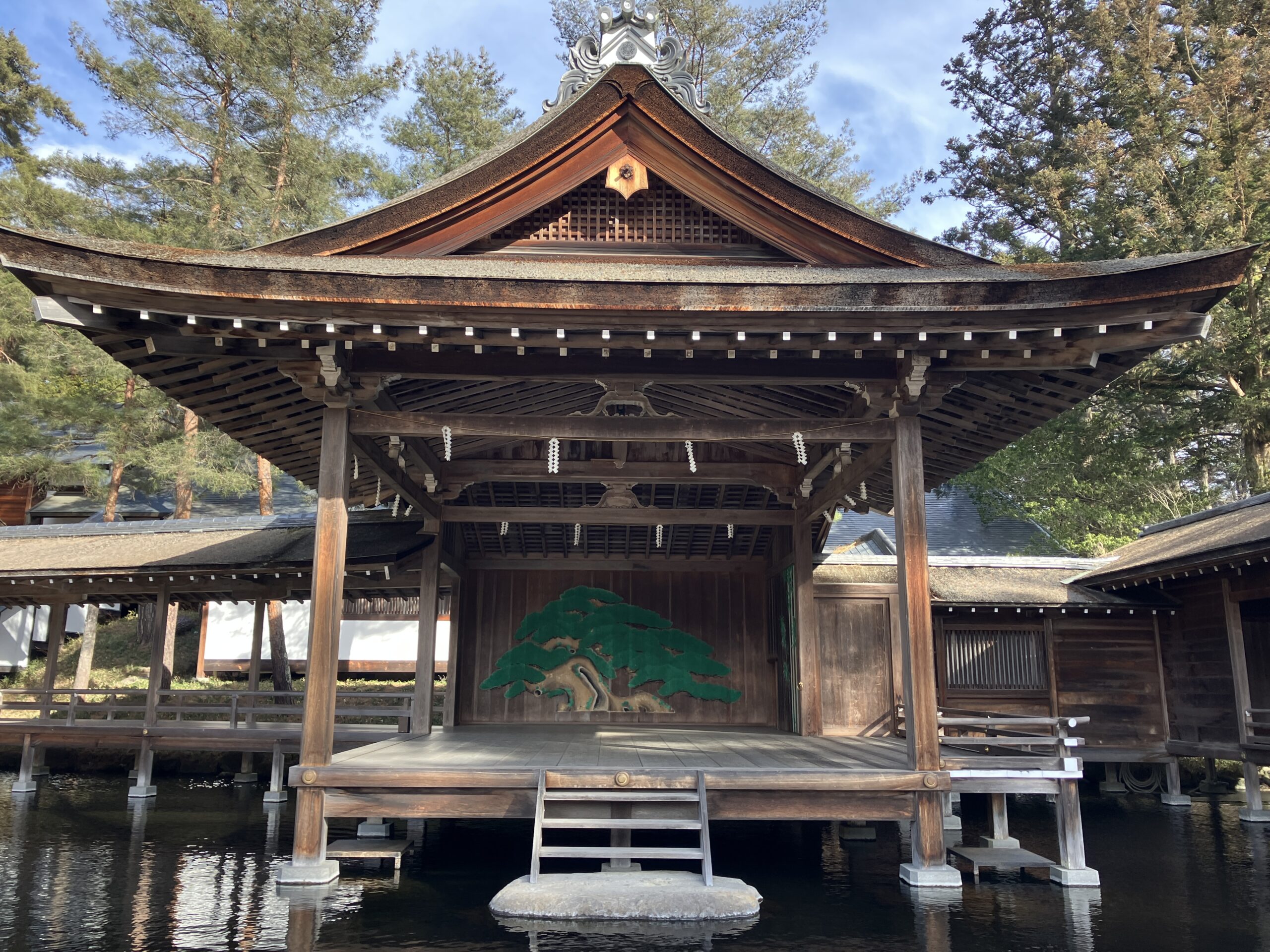
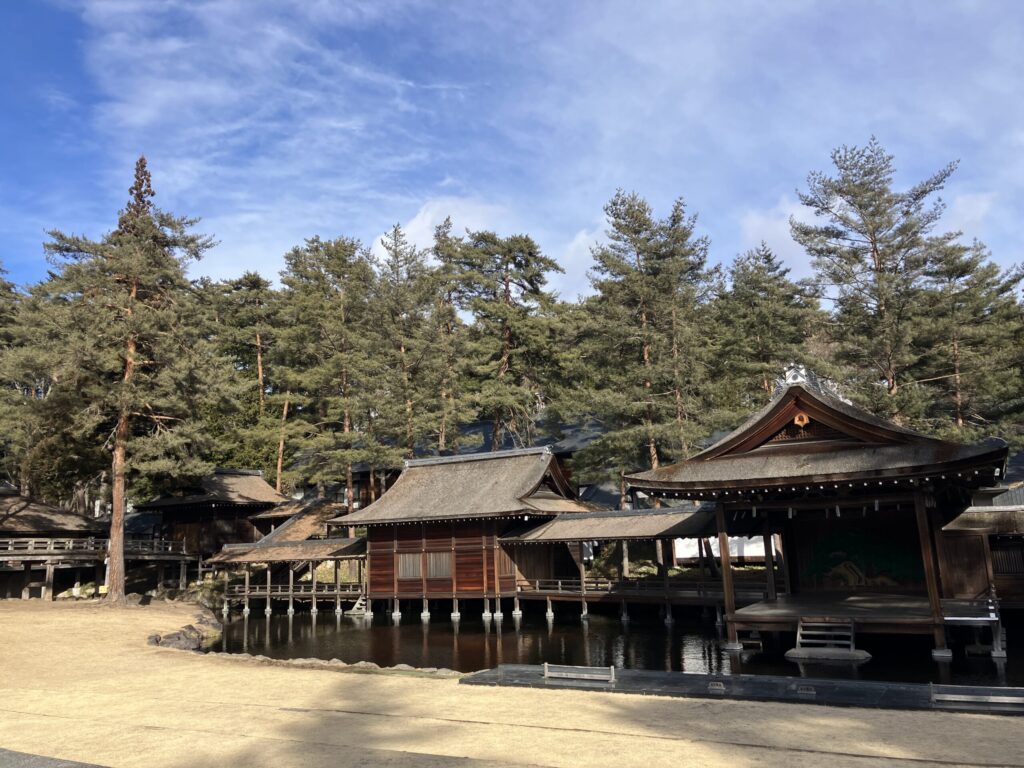
A path of white gravel leads through cedar trees to a wide, still pond. In the middle of the water, connected to the shore by a narrow bridge, stands a Noh stage — dark wood, ancient form, reflected perfectly on the surface below.
Nobody warns you about this. The travel guides focus on Fuji. But Misogi Shrine is unlike anything else in Japan.
What is this place?
Misogi Shrine is a Shinto shrine in Hokuto City, in the highlands of northwestern Yamanashi. Over the decades, it has drawn some of Japan’s best-known artists and performers to its grounds. The space reflects a very particular vision: wide open, geometrically precise, with water at the center.
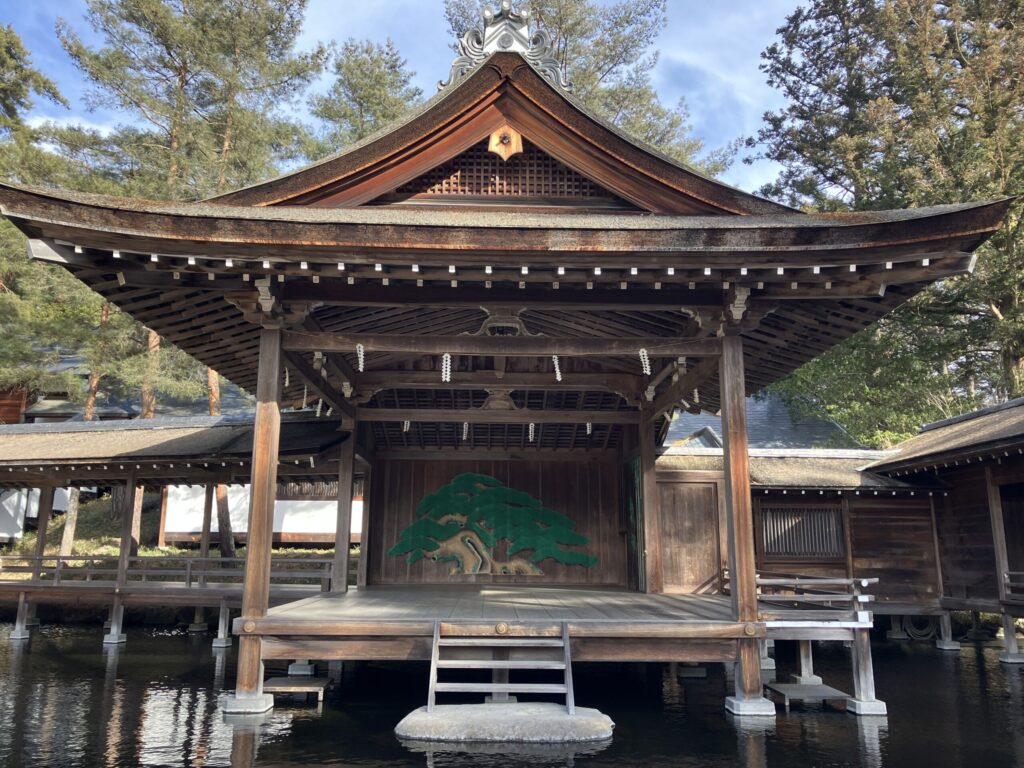
The floating Noh stage is the heart of the shrine. It was built to host Noh — Japan’s oldest performing art, combining mask, costume, dance, and chant into something closer to ritual than theater. The stage sits on the water so that performances seem to float between sky and earth.
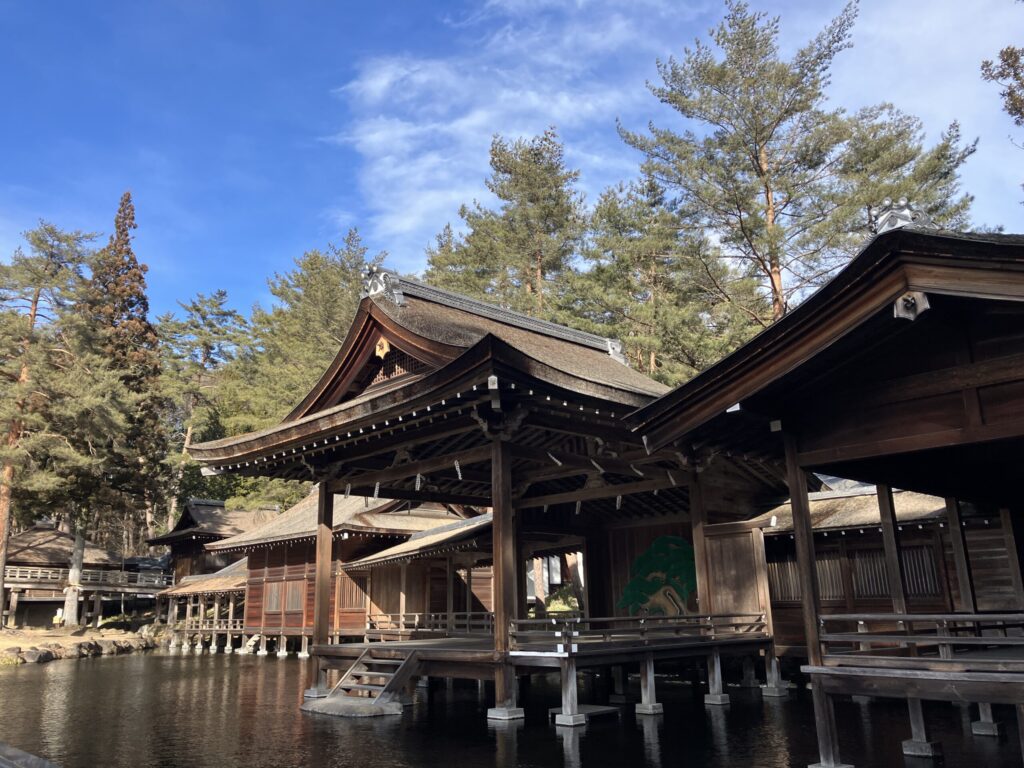
On windless days, the stage reflects perfectly on the surface — you find yourself looking at two stages, one above and one below.
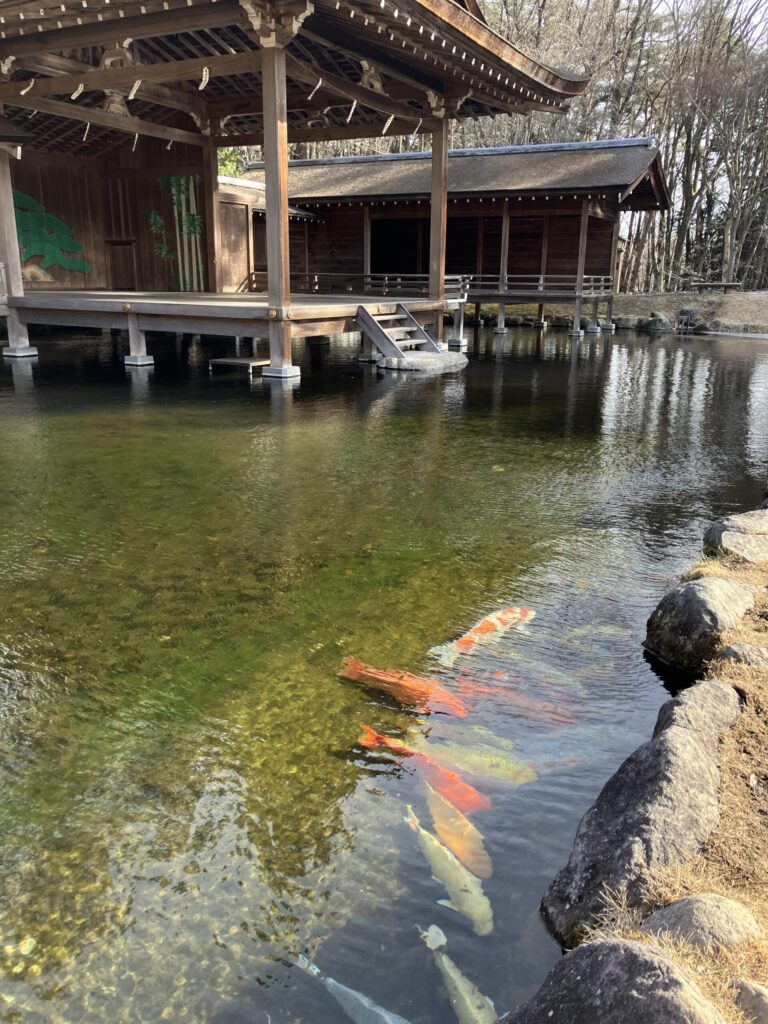
One Night a Year: Torchlight Noh on the Water
Every August, Mansai Nomura — Japan’s most celebrated Noh performer, and the man who choreographed the 2021 Tokyo Olympics opening ceremony — performs here by torchlight.
The Takigi Noh (torch Noh) at Misogi Shrine is held every year on August 3rd — a fixed date, so you can plan around it. It draws audiences from across Japan. If you can time your visit to coincide with it, the experience is extraordinary. Flames reflect in the water. Drums echo across the mountains. A masked figure moves in ways that don’t quite fit the modern world.
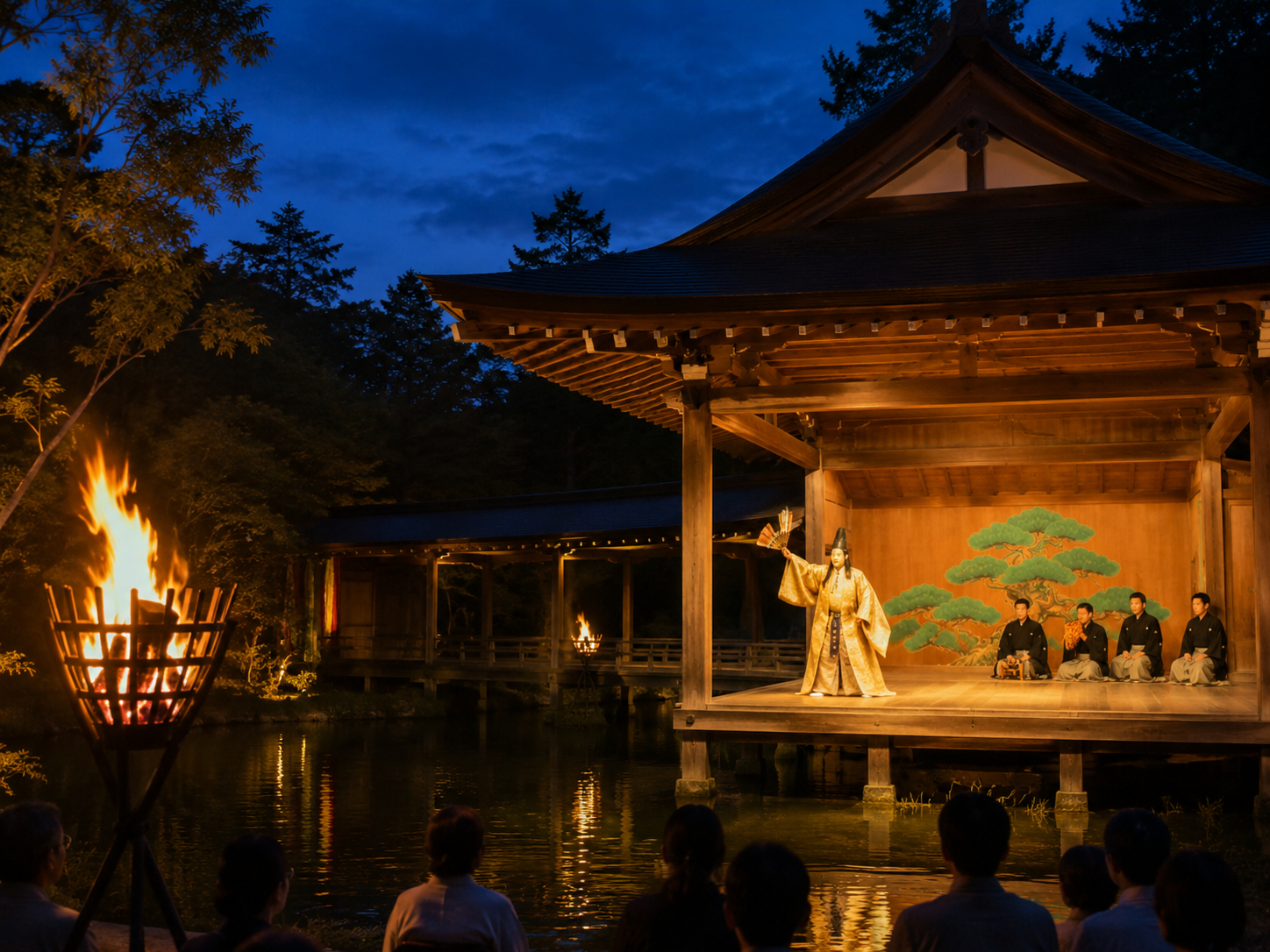
※ Image is illustrative
The Netflix connection and the band that loved this place
Misogi Shrine has appeared in international media in recent years — a Netflix production filmed here, and Yuzu, one of Japan’s best-known folk-pop duos, has a personal connection to the shrine: vocalist Yukihito Kitagawa held his wedding ceremony here.
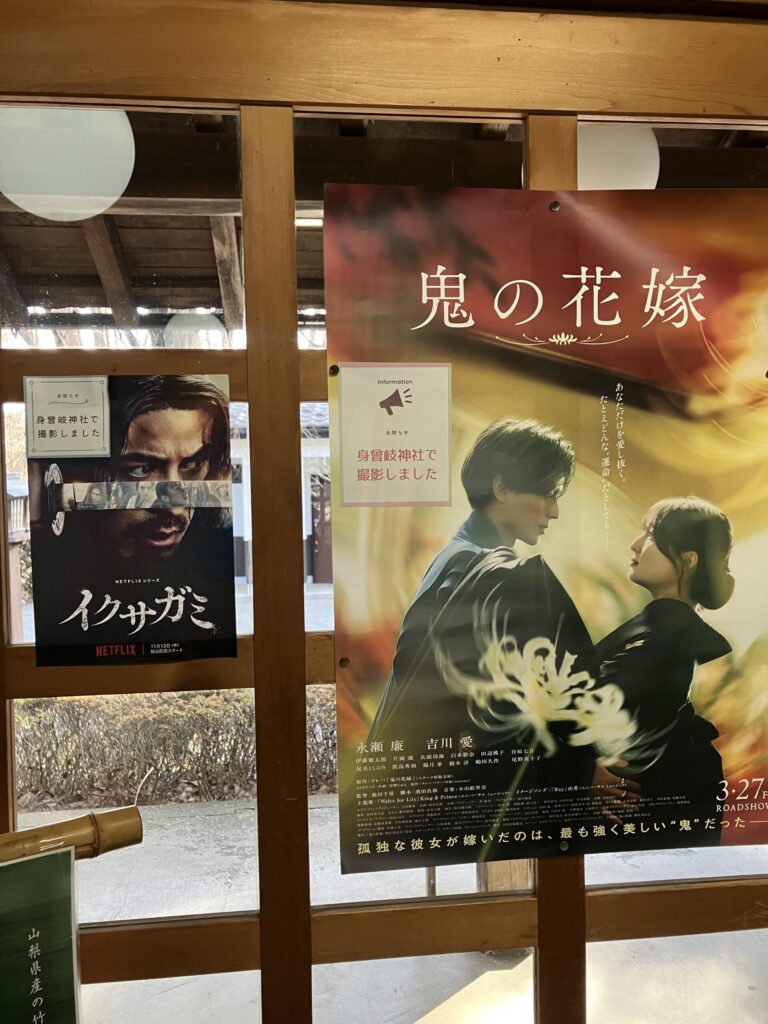
These things attract attention, but the shrine absorbs visitors quietly. Even on busy weekends, the scale of the grounds — and the restraint built into Japanese sacred spaces — means it never feels crowded.
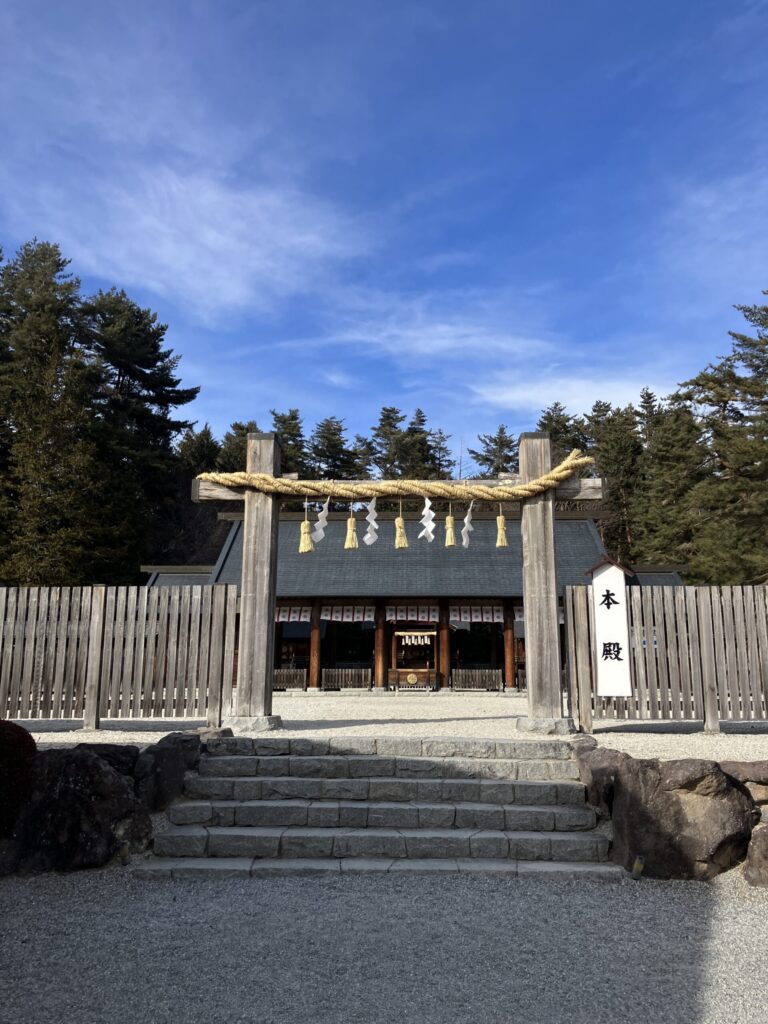
Visiting on a regular day
The grounds are open to visitors year-round. The experience of an ordinary day here is still remarkable: the reflections on the water, the texture of the white gravel underfoot, the scale of the shrine buildings against the surrounding forest.
After walking the grounds, stop at Yōjōkan, the on-site rest house. Order matcha and sit for a while. Look at the water.
This is the kind of place that asks nothing of you except attention.
Practical notes
- Entry: Free
- Goshuin (ritual stamp): ¥500
- Hours: 9:00–17:00 (until 16:00 on weekdays)
- Takigi Noh: Every year on August 3rd. Tickets go on sale in early June at the shrine
- Photography: Allowed throughout the grounds
Misogi Shrine is the most-visited shrine in Yamanashi for New Year’s visits (hatsumode). For the rest of the year, it belongs to whoever finds their way here.
Getting There
By Car: About 20 minutes from Nagasaka IC or Sutama IC on the Chuo Expressway. Free parking on-site. By Train: Walk about 15 minutes (1.2 km) from Kai-Koizumi Station on the JR Koumi Line. Or take a taxi from Nagasaka Station (~15 min). Note: A car makes the area much easier to explore.