The museum is unhurried by design — low light, quiet rooms, glass cases full of 4,000-year-old objects. Take your time with each figurine. The faces are all different. On weekdays you may be the only visitor. After the museum, the peach orchards outside invite a slow walk.
Two minutes from the highway rest stop. That’s all it takes to reach one of the most significant Jomon period sites in Japan.
Shakado Site Museum holds 5,599 artifacts — every single one designated an Important Cultural Property by the Japanese government. Among them: 1,116 clay figurines (dogū), one of the largest collections from a single site anywhere in the country.
Most people driving the Chuo Expressway have no idea it exists.
What are Jomon figurines?
The Jomon period ran from roughly 14,000 BCE to 300 BCE — Japan’s prehistoric era, long before rice farming, long before samurai, long before anything most visitors come to Japan to see. The people of this period made remarkable things from clay: pots with flame-like rims, and figurines that nobody fully understands.
The figurines here are strange and compelling. Some are heavily pregnant. Some have goggle-like eyes. Some are broken in ways that suggest the breaking was intentional — ritual objects, perhaps, destroyed as part of ceremonies nobody recorded.
Stand in front of a case full of them and you feel the distance of 4,000 years. Then you notice the expressions on their faces — and the distance collapses slightly.
The story of how it was found
The reason a world-class Jomon museum sits next to a highway rest stop is worth knowing.
When the Chuo Expressway was being constructed in the 1970s, excavation work uncovered far more artifacts than anyone anticipated. The local community mobilized — hundreds of residents joined the dig, carefully documenting what emerged from the earth. The finds were so significant that the museum was built on-site to house and display them.
The exhibition tells this story clearly, with photographs and accounts from the excavation. It’s an unusually honest look at how archaeology actually works: messy, community-driven, and occasionally astonishing.
The panoramic view nobody mentions
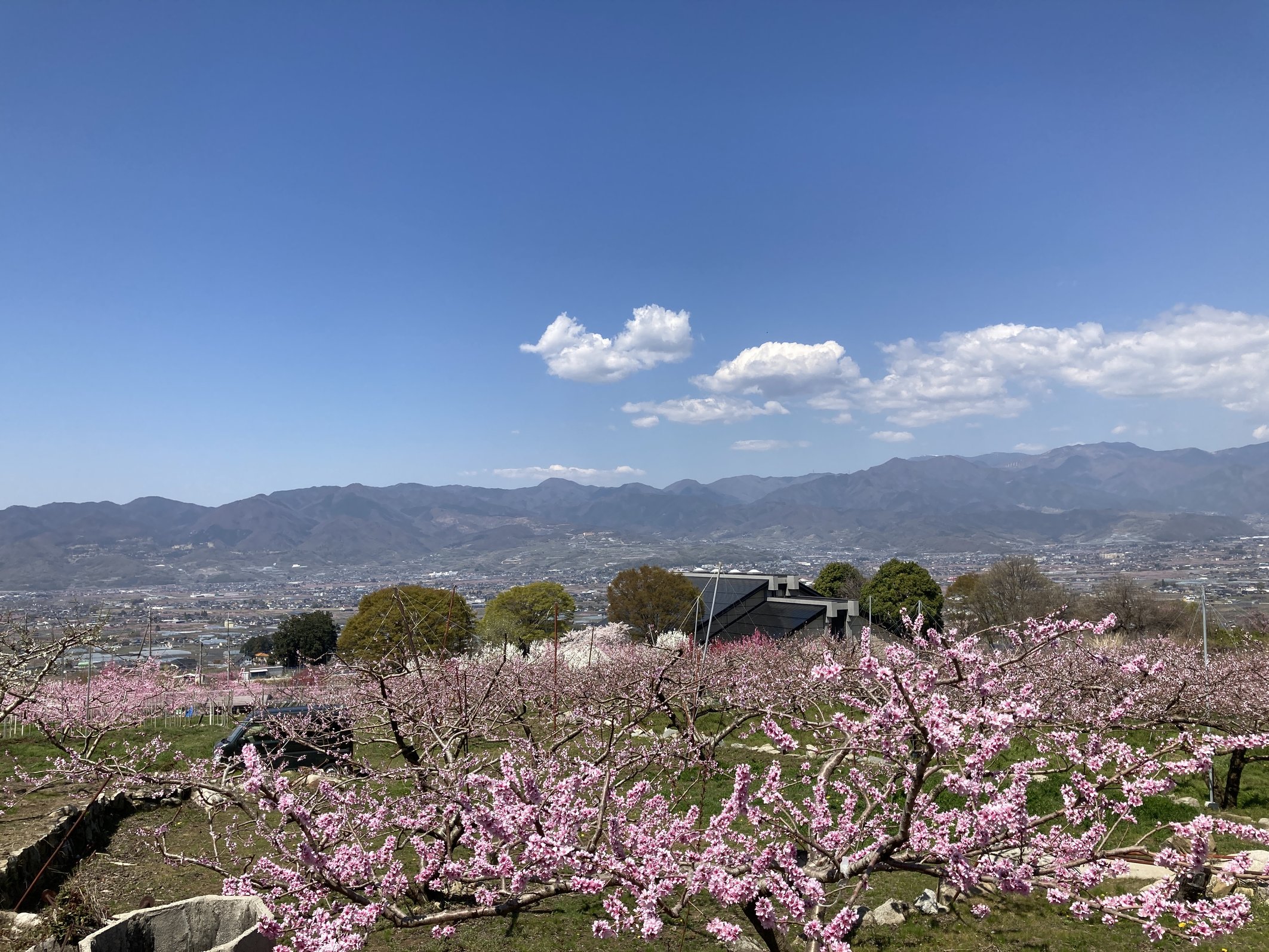
Behind the museum, a path leads up through the orchards toward a higher point above the Kofu Basin. On a clear day, the view stretches across the valley to the Southern Alps — one of those quietly spectacular Yamanashi views that never shows up in travel guides.
Walk up for ten minutes. Look at the mountains. Then come back down.
Spring: when the peach orchards bloom
The museum sits in the middle of Yamanashi’s peach-growing country. From late March through early April, the surrounding orchards turn pink — a sea of blossoms that draws crowds to the famous viewing spots nearby, but leaves this corner relatively quiet.
Adjacent to the parking lot, a small farm stand called Komazawa Farm opens seasonally, selling handmade kusamochi (rice cakes with mugwort). The smell of the mugwort, the pink orchards, the old clay faces in the cases behind you — it’s a combination that stays with you.
Shakado Site Museum
- Admission: ¥310 (adults)
- Hours: 9:00–17:00 (closed Mondays, and December 29–January 3)
- Access: 2 min walk from Shakado Downbound Rest Area (Chuo Expressway), or 5 min by car from Katsunuma IC
- Free parking on-site
- Website: eps4.comlink.ne.jp/~shakado
Getting There
By Car (easiest access in Japan): From Shakado Downbound Rest Area on the Chuo Expressway, walk 2 minutes via a dedicated staircase — no need to exit the highway. From Katsunuma IC: approximately 5 minutes by car. Free parking on-site (mornings recommended in spring). By Train: No convenient access. Car strongly recommended.